Ten affirmations for inner child healing — words for the younger you who needed them, said now by the adult who can finally give them.
August 13, 2026
·
3 min
Inner child work sounds abstract until you try it, and then it is startlingly specific. You remember a particular age, a particular room, a particular thing you needed someone to say — and you notice nobody ever did.
These ten affirmations are that missing sentence, delivered late. They are unusual among affirmations because they are addressed to someone else: a version of you who is still, in some way, waiting.
Speaking to your younger self
Say the line out loud and in the second person if you can — "you were always loved" rather than "I was". It feels strange and it works better, because the point is to hear the reassurance from outside rather than from the same anxious narrator.
Do this in small doses. Inner child work reaches real material quickly, and ten minutes is plenty. If it consistently opens something heavy, that is a good reason to do it alongside a therapist rather than alone.
10 Affirmations for Inner Child Healing
1. “I comfort my inner child with words of love.”
2. “I honor the little me who just wanted to be loved.”
3. “I remind my inner child that they are loved, always.”
4. “I give my inner child the love and care they always needed.”
5. “I offer my inner child the security they always deserved.”
6. “I offer love and reassurance to my younger self.”
7. “My inner child and my adult self are equally worthy of unconditional love.”
8. “I speak to myself with the tenderness I needed as a child.”
9. “I hold my younger self in my heart with love.”
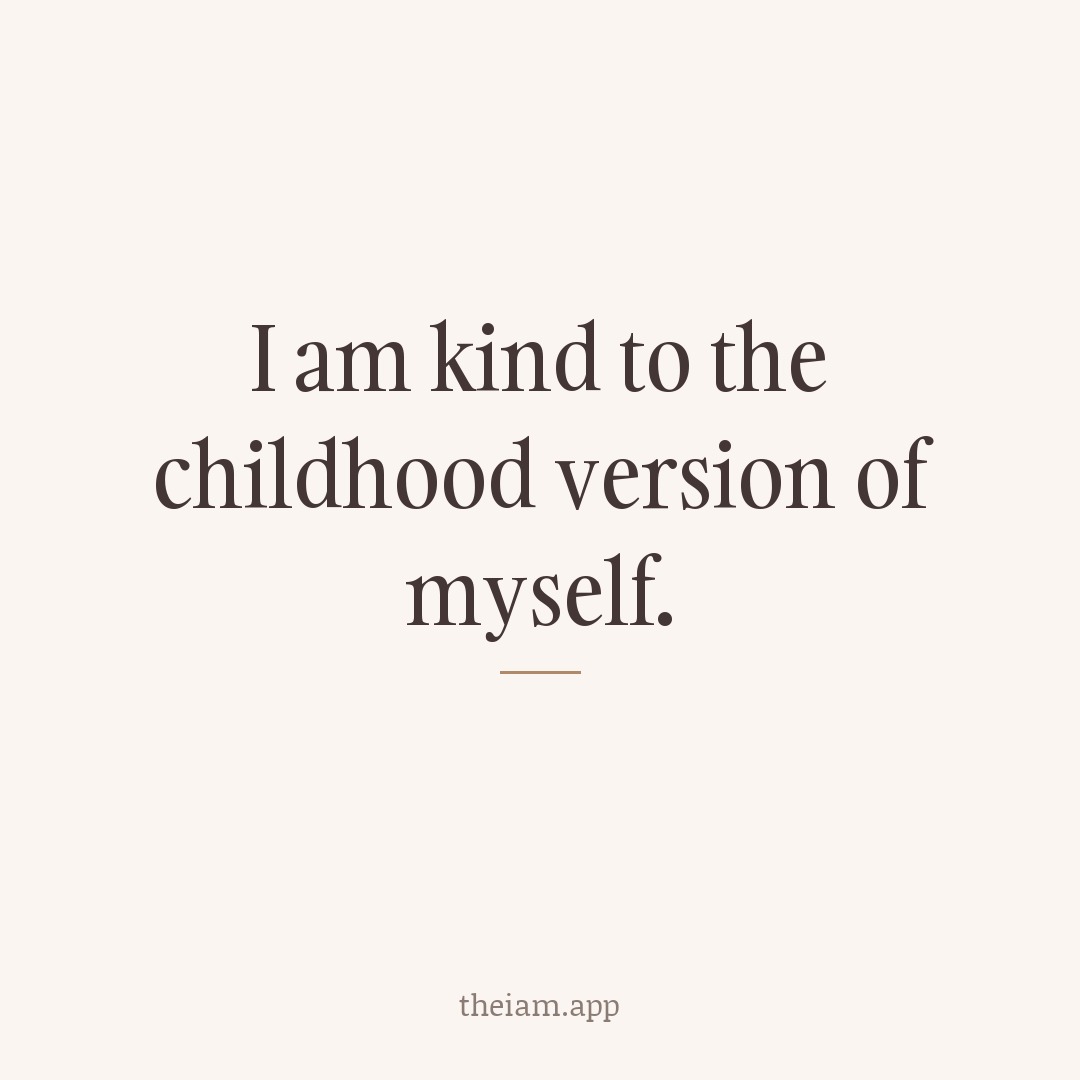
10. “I am kind to the childhood version of myself.”
Frequently asked questions
What is inner child healing?
Attending to the needs and beliefs formed early in life that still shape how you react as an adult — usually by offering yourself the reassurance or safety that was missing at the time.
How do I talk to my inner child?
Out loud, in the second person, addressed to a specific age. "You were always worthy of love" said to a remembered eight-year-old lands very differently from a general statement about self-worth.
Do inner child affirmations really work?
Many people find them unusually powerful, precisely because they bypass the adult self-critic. For deep childhood wounds they work best alongside therapy rather than instead of it.
Is it normal to cry doing this?
Very. It is often the first sign the work is reaching something real, which is also the reason to keep the sessions short and to have support available.