Nine affirmations for letting go of control — for the outcome you cannot influence and the grip that is costing you more than it buys.
June 29, 2026
·
3 min
Control is a reasonable strategy right up to the point where it stops working. Then it becomes a full-time job with no output: rechecking, rehearsing, managing other people's reactions in advance, and getting steadily more tired without getting any safer.
These ten affirmations draw the line in the only place it can go — between what is actually yours and what never was. Letting go is not giving up. It is putting effort where it can still do something.
Separating yours from not yours
Before you say the line, name the thing out loud: the decision someone else is making, the reaction you cannot predict, the timing you do not set. Vague surrender does not work; specific surrender does.
Then give the freed-up attention somewhere to go. Control habits leave a gap when you drop them, and an unoccupied gap fills itself back up with the same worry. One small task you actually own is the usual fix.
9 Affirmations for Letting Go of Control
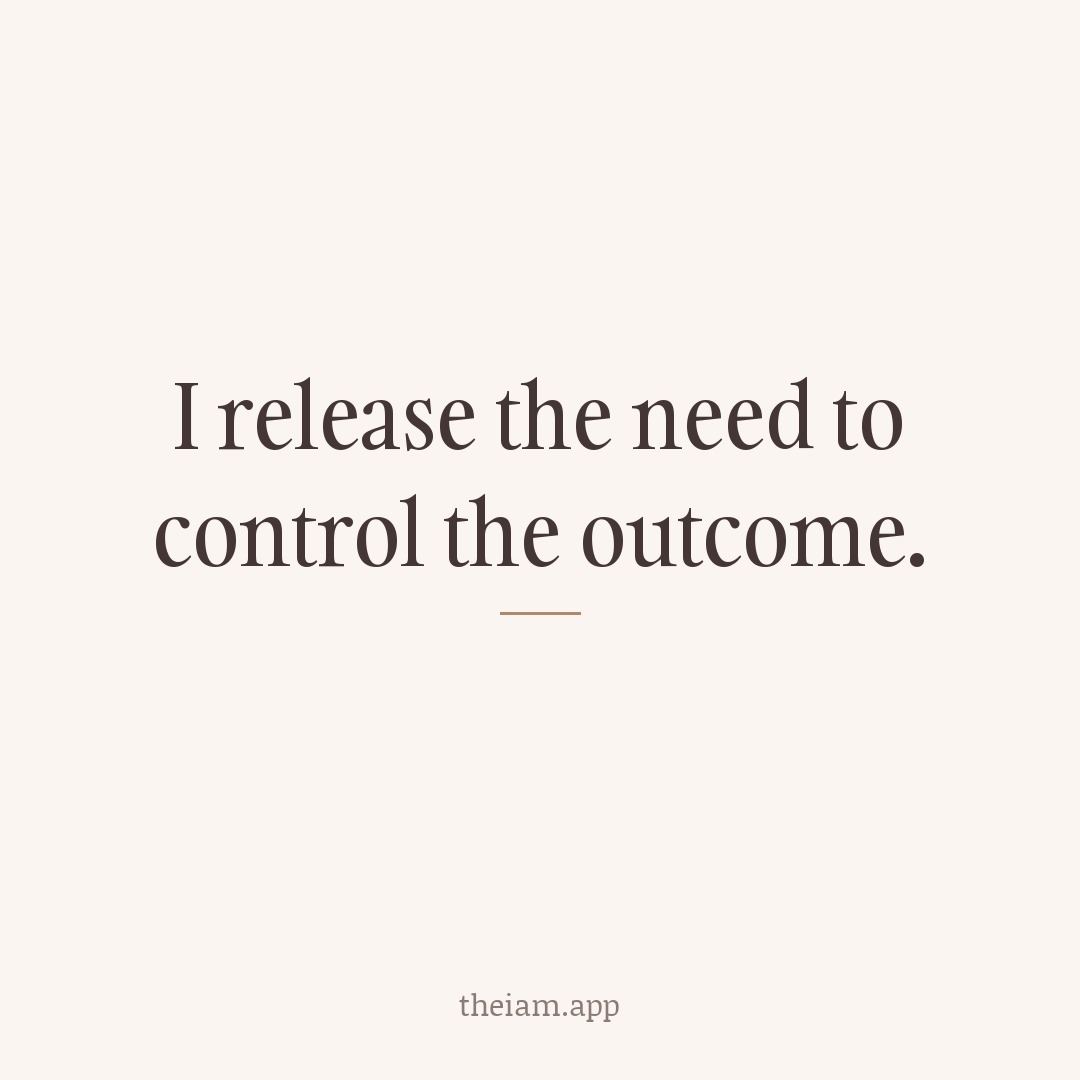
1. “I release the need to control the outcome.”
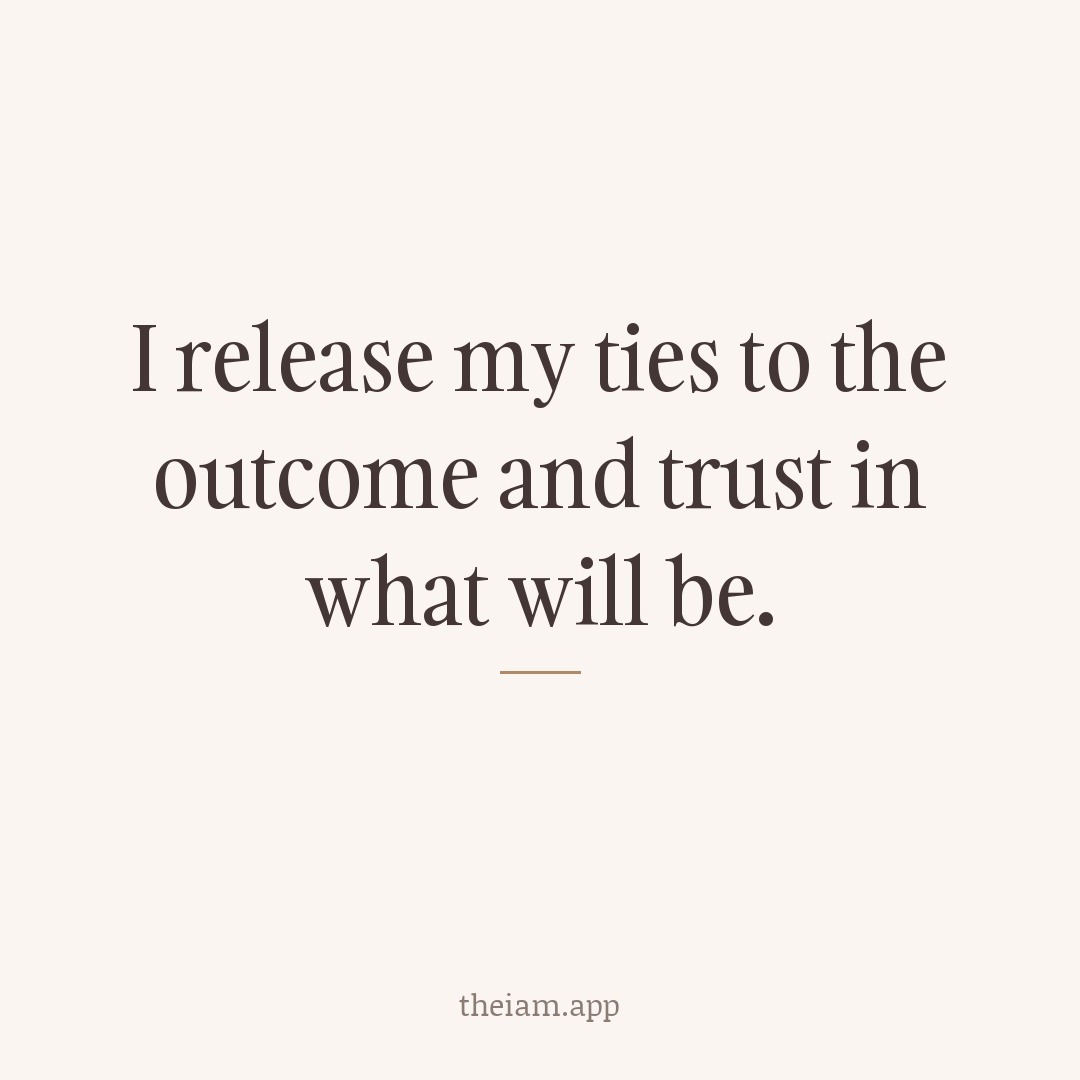
2. “I release my ties to the outcome and trust in what will be.”
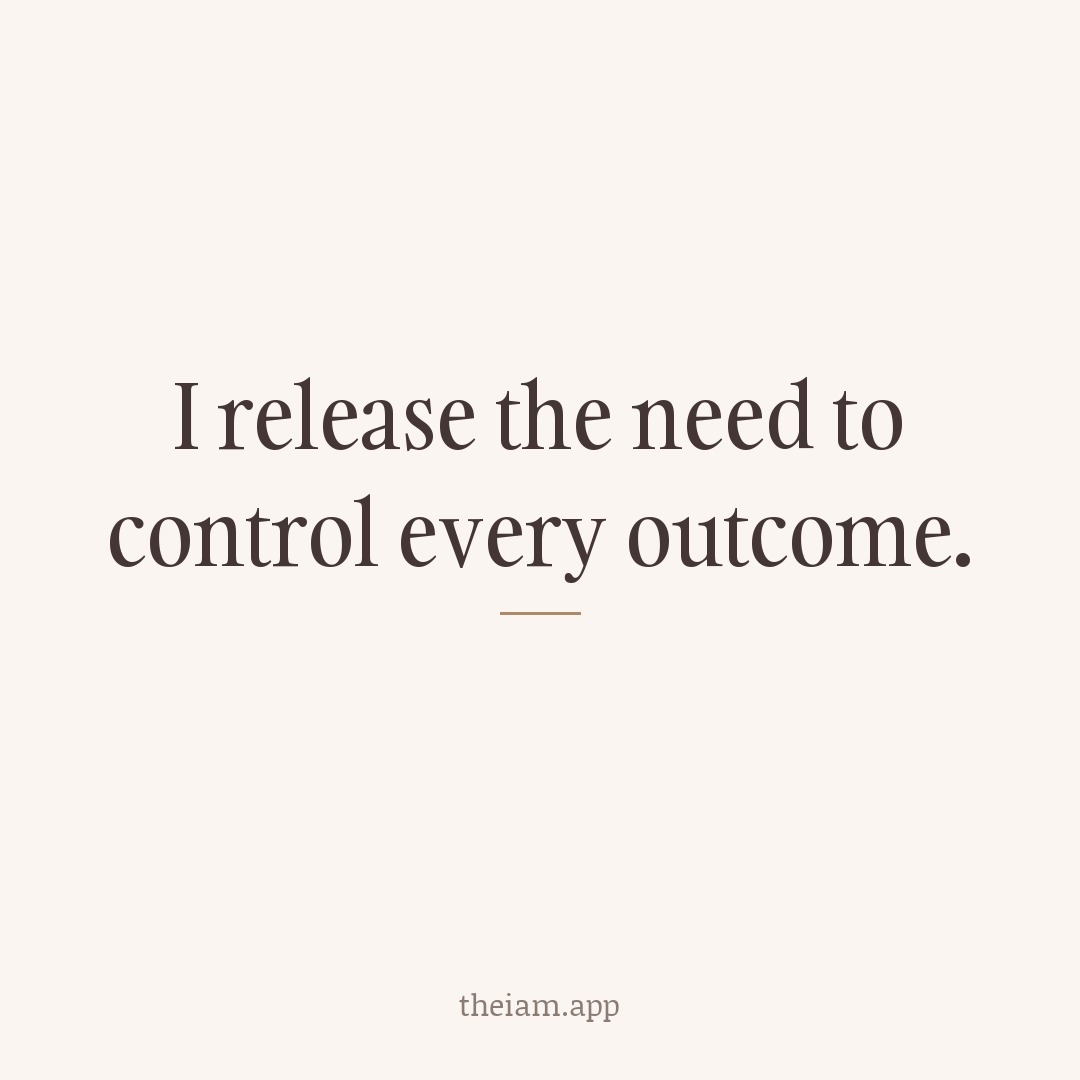
3. “I release the need to control every outcome.”
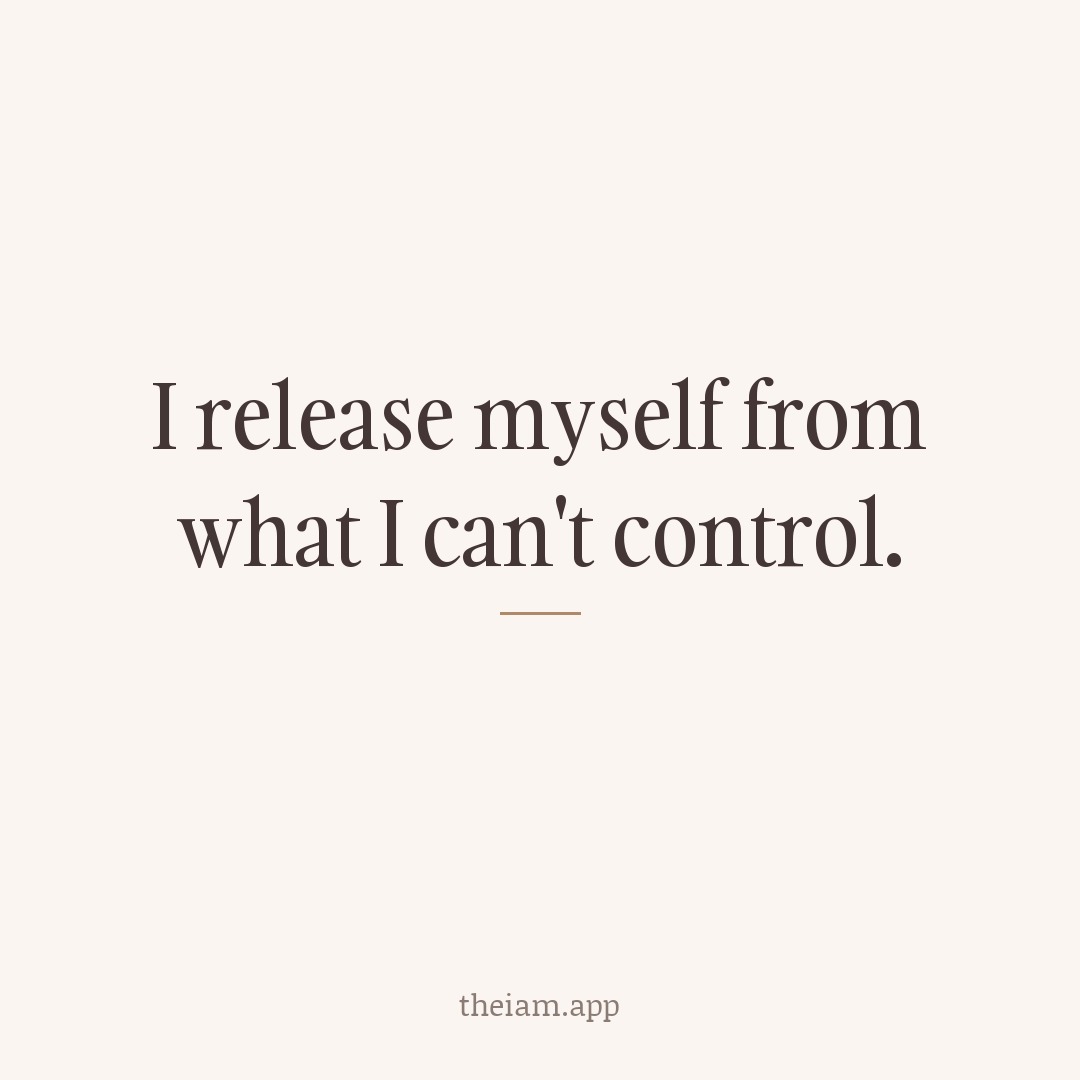
4. “I release myself from what I can't control.”
5. “I only focus on what I control and I release the rest.”
6. “I surrender the things I can't control.”
7. “I release my need to control the outcome of the situation that's stressing me out.”
8. “I allow myself to release what I cannot control.”
9. “I release the need to control everything.”
Frequently asked questions
How do I actually let go of something I cannot control?
Name it specifically, then choose one thing you can do instead and do that. Letting go works as a redirection of effort rather than as an act of will — telling yourself to stop caring almost never lands.
Is letting go the same as not caring?
No. You can care about an outcome enormously and still accept that the deciding is not yours. Confusing the two is what keeps people gripping something that cannot be gripped.
What is the best affirmation for letting go of control?
"I only focus on what I control and I release the rest." It gives you a division to make rather than a feeling to manufacture, which makes it far easier to actually use.
Why do I try to control everything?
Usually because control once worked — often in a situation where nobody else was going to hold things together. Recognising it as an old strategy rather than a flaw makes it much easier to set down.