Nine affirmations to stop people pleasing — for the yes you regretted, and the slow work of needing only your own approval.
June 23, 2026
·
3 min
People pleasing rarely feels like a choice. It feels like the only available option: agree, absorb, smooth it over, and deal with the cost later, privately. The bill always arrives — as resentment, or exhaustion, or a diary full of things you did not want to do.
These ten affirmations go straight at the root, which is approval. Not being liked less, but needing it less. That is the difference between a boundary you can hold and one you apologise your way out of.
The pause that changes everything
Say one line, then buy yourself time: "let me check and come back to you". Almost every regretted yes was given in the first three seconds, and a habit of pausing does more than any amount of resolve.
Expect the discomfort to arrive after you say no, not before. That is normal and it passes, usually within a day. The affirmations about approval are for that window — the hours where the guilt makes a very convincing case for undoing it.
9 Affirmations to Stop People Pleasing
1. “I only need one person's approval: mine.”
2. “The only approval I ever need is mine.”
3. “My worth is not dependent on anyone else's approval.”
4. “I accept myself unconditionally, without needing anyone else's approval.”
5. “I let go of the need for approval.”
6. “I am enough without proving myself to anyone.”
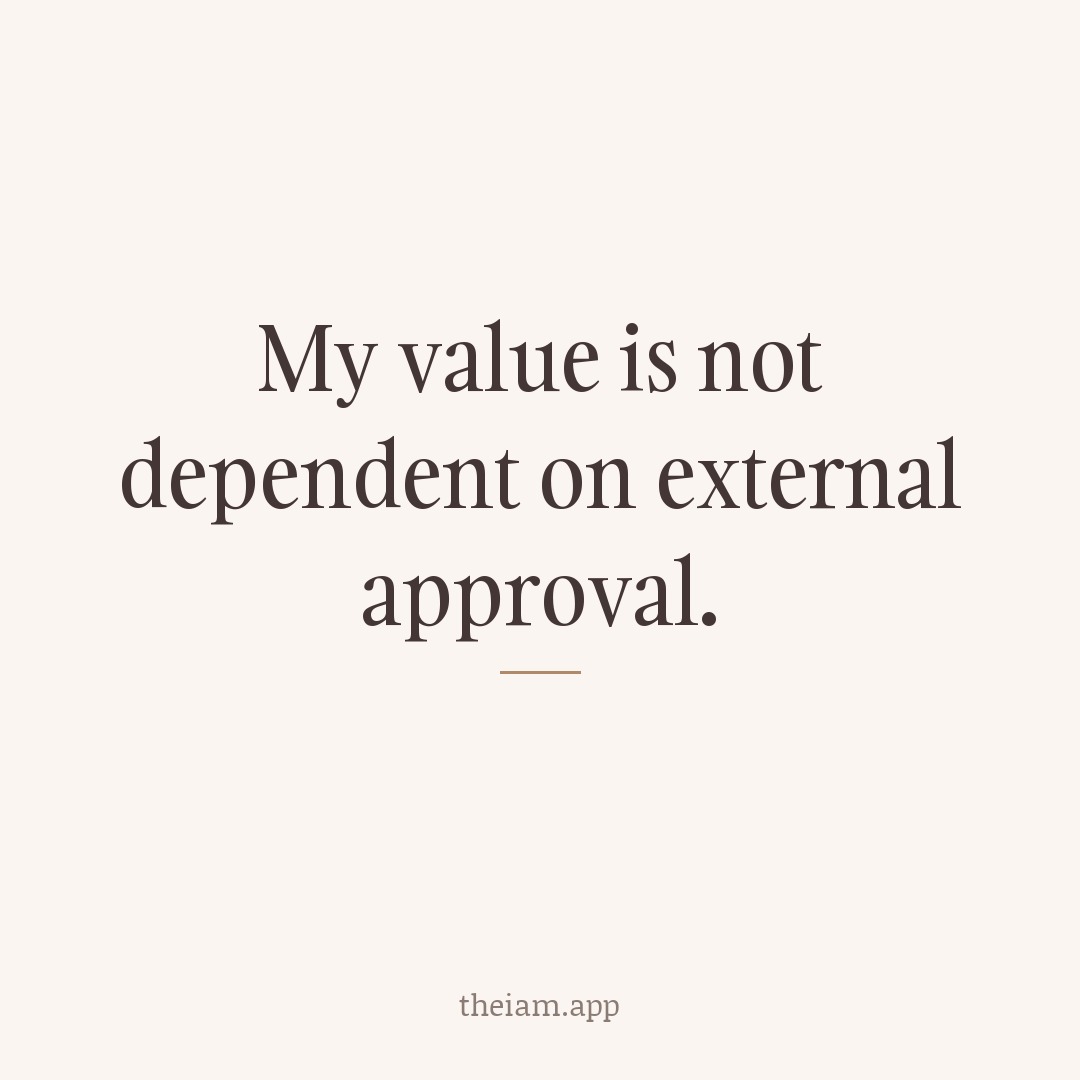
7. “My value is not dependent on external approval.”
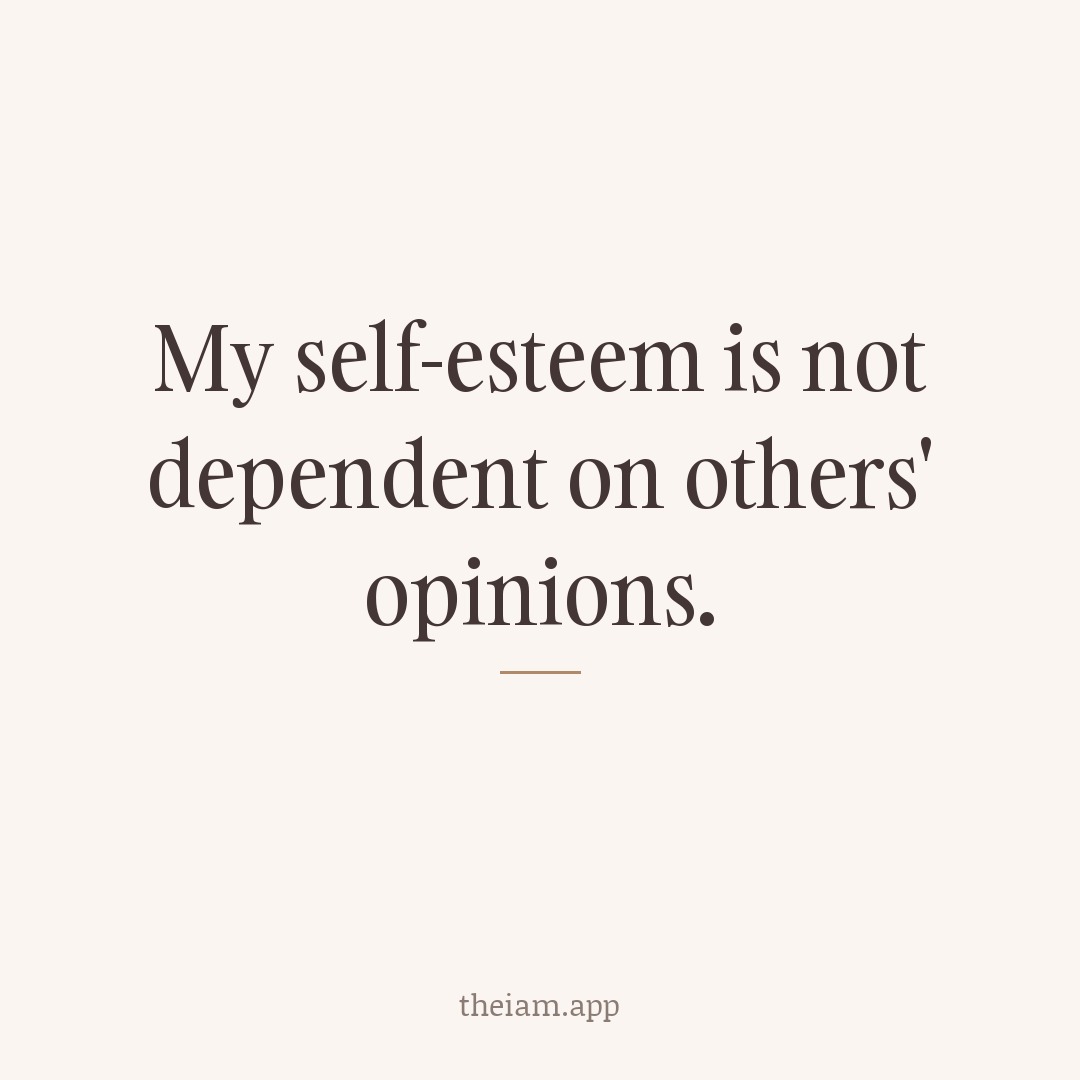
8. “My self-esteem is not dependent on others' opinions.”
9. “I approve of who I am.”
Frequently asked questions
How do I stop being a people pleaser?
Start with the pause rather than the no. "Let me check and come back to you" is easier than a refusal and it removes the three-second window where most people-pleasing happens. The no gets much simpler when it is not also instant.
Why do I feel guilty after setting a boundary?
Because guilt is what a new habit feels like from inside an old one. It usually peaks a few hours after and fades within a day — treating it as a signal you did something wrong is what makes people reverse a good decision.
What is the best affirmation for people pleasing?
"I only need one person's approval: mine." It is short enough to use in the moment and it names the actual mechanism, which is the trade of your own preferences for someone else's approval.
Is people pleasing the same as being kind?
No, and the difference is choice. Kindness is something you give; people pleasing is something you pay. One leaves you fuller and the other leaves you counting the cost.